

Frequently Asked Questions About Uechi-Ryu Hozonkai
Learn more about Uechi-Ryu, the Hozonkai lineage in Australia, and the traditional Okinawan training preserved under Grandmaster Takehiro Gaja.
What is Uechi-Ryu Karate?
Uechi-Ryu is a traditional Okinawan karate style founded by Kanbun Uechi after studying the Chinese martial art Pangainoon, meaning “Half Hard, Half Soft”. It combines close-range self-defence, circular movement, body conditioning and practical striking.
What is Uechi-Ryu Hozonkai?
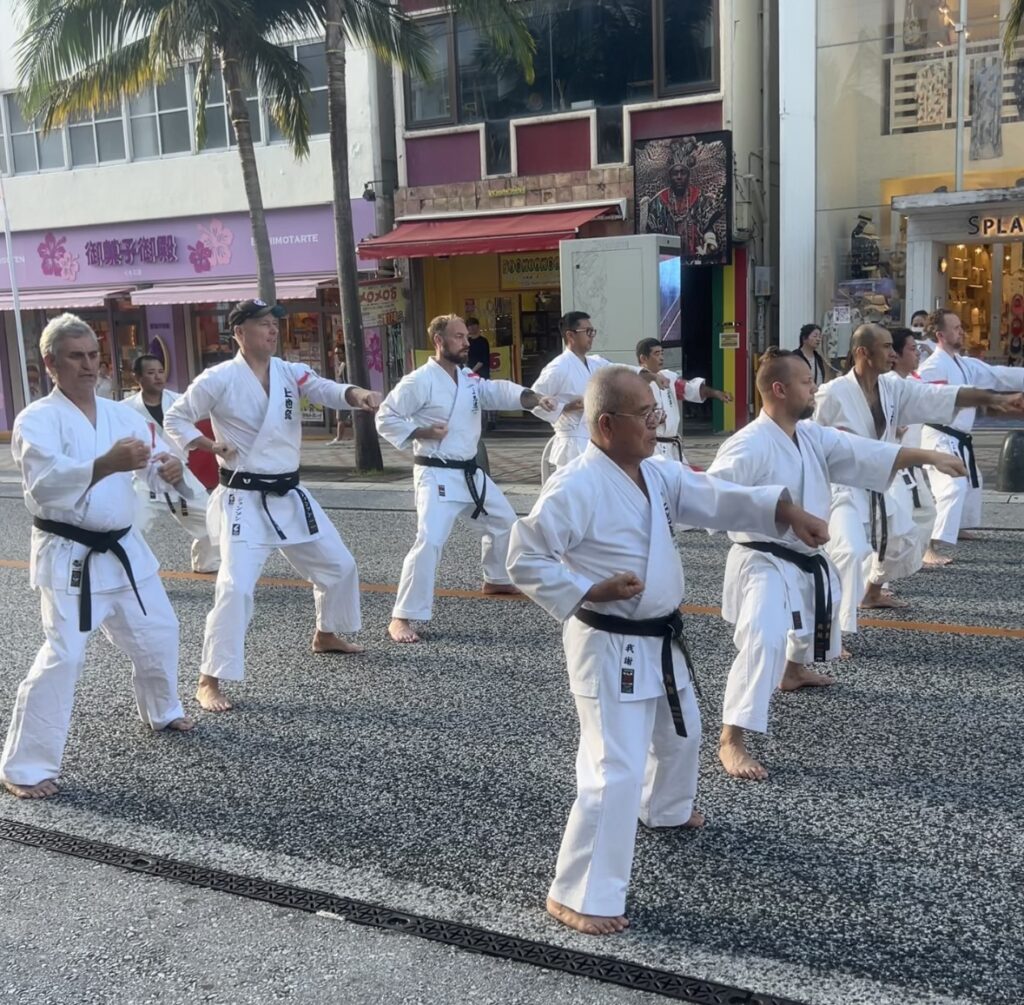
Hozonkai means “Preservation Society”. Uechi-Ryu Karate-do Hozonkai is dedicated to preserving the traditional Okinawan teachings of Uechi-Ryu under Grandmaster Takehiro Gaja in Okinawa.
Is Uechi-Ryu effective for self-defence?
Uechi-Ryu training includes short stable stances, circular blocks, close-range striking and natural body mechanics. How well any martial art supports self-defence depends on the quality and consistency of training, the situation and the individual practitioner.
What makes Uechi-Ryu different?
Uechi-Ryu retains strong roots in Southern Chinese martial arts, with movements associated with Tiger, Crane and Dragon principles. Its training generally emphasises compact movement, traditional kata and practical application rather than point-scoring competition.
How many Hozonkai dojos are in Australia?
The Hozonkai lineage is very small in Australia. Today there are only two known dojos teaching under Grandmaster Takehiro Gaja: Kianga under Sensei Karl Aylliffe and Sydney under Sensei David Stennett.
Do all Uechi-Ryu schools use the same belt system?
No. Belt colours and grading structures vary around the world. We keep our grading system as close as possible to the Okinawan Hozonkai system while preserving the same core curriculum and technical standards.
Continue Exploring Uechi-Ryu
For more detailed context, read the history of Uechi-Ryu Hozonkai in Australia, review the Australian grading system, or find an Australian Uechi-Ryu dojo. Our editorial and sources policy explains how we review claims and corrections.