

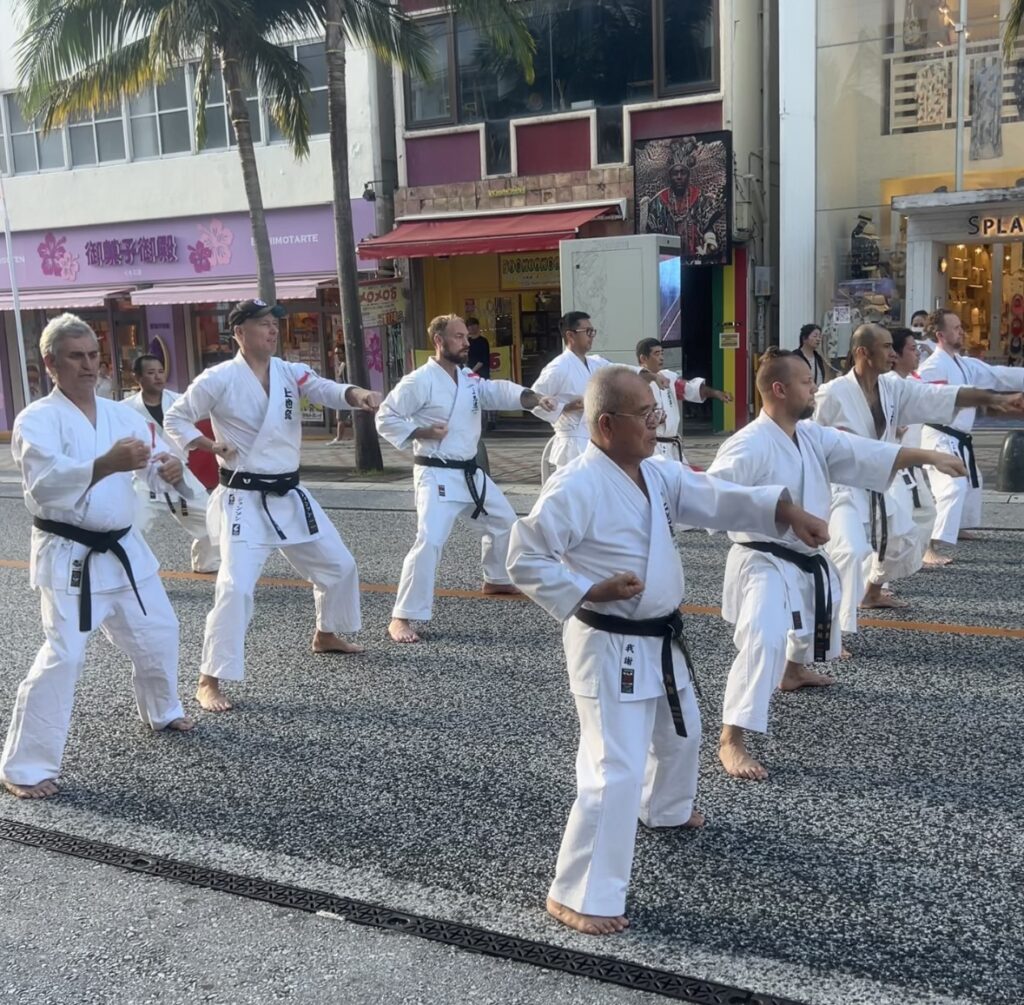
The History of Uechi-Ryu Hozonkai in Australia
Uechi-Ryu is one of the oldest and most traditional styles of Okinawan karate. Founded by Kanbun Uechi after studying the Chinese fighting art Pangainoon (Half Hard, Half Soft), it has remained remarkably faithful to its original principles. Unlike many modern karate styles that have evolved into competitive sports, Uechi-Ryu continues to emphasise practical self-defence, close-range fighting and efficient body mechanics.
The art arrived in Australia during the late 1960s and early 1970s through a small number of dedicated practitioners who trained directly with Okinawan masters. Early pioneers such as Ahti Kaend, Robert Donnelly, Peter Gooding and Arthur Moulas established dojos throughout Australia and laid the foundations for what would become a respected Uechi-Ryu community. Through their efforts, Australian karateka gained direct access to authentic Okinawan instruction while preserving the traditions and values of the style.
Among these pioneers, Hanshi Arthur Moulas played a particularly significant role. His dojo became one of Australia’s leading centres for Uechi-Ryu, producing many skilled instructors and competitors who would later establish dojos of their own. It was during this period that two students, Karl Aylliffe and David Stennett, began training under Arthur Moulas, later continuing their development under Vince Lepore.
Karl Aylliffe quickly established himself as one of Australia’s finest Uechi-Ryu practitioners. His skill was recognised internationally when he won the prestigious All-Okinawan Karate Tournament Open Kumite Championship in both 1992 and 1993—an achievement that remains rare for a non-Japanese competitor. At the same time, David Stennett was building a broad martial arts background that extended beyond traditional karate. Over many years he competed successfully in karate and other martial arts disciplines while travelling extensively throughout Japan, Thailand and other parts of Asia to train with experienced instructors from a variety of fighting systems. This wider experience informed how he understood the principles of traditional Uechi-Ryu and their application in practical self-defence.
As Uechi-Ryu continued to evolve in Australia, Karl Aylliffe and David Stennett chose to continue their martial arts journey through a direct Okinawan lineage. Rather than following the direction taken by the Moulas organisation, they became students of Grandmaster Takehiro Gaja, Head of Uechi-Ryu Karate-do Hozonkai in Okinawa. Under Gaja Sensei they continued to study the traditional curriculum, maintaining close ties with Okinawa and preserving the techniques, philosophy and spirit of authentic Uechi-Ryu.
Today, the Hozonkai lineage remains a small but dedicated part of Australia’s martial arts community. To the best of our knowledge, there are only two dojos in Australia continuing to teach Uechi-Ryu Hozonkai under Grandmaster Gaja: one in Kianga, New South Wales, under Sensei Karl Aylliffe, and one in Sydney under Sensei David Stennett.
Both instructors remain committed to preserving the traditional Okinawan art as it was intended to be practised—not as a sport, but as a complete system of self-defence and personal development. Uechi-Ryu Hozonkai continues to emphasise natural movement, short and stable stances, circular defensive techniques, close-quarter fighting, body conditioning and practical applications within the traditional curriculum. It is this commitment to authenticity and practicality that ensures the art remains as relevant today as it was when Kanbun Uechi first introduced it more than a century ago.
Continue Exploring Uechi-Ryu
Learn how this lineage is practised and preserved through the Australian Uechi-Ryu grading system, find answers in the Uechi-Ryu Karate FAQ, or locate an Australian Hozonkai dojo. You can also read our editorial and sources policy to understand how historical claims, attribution and corrections are handled.